
Here’s a confession: I’ve made every mistake in this article. Some of them more than once. I was a preschool teacher for five years before I had my own kids, and I still walked into parenting Noah convinced I’d cracked the code — until Noah, then Lily, showed me I hadn’t cracked anything at all.
So this isn’t a lecture from someone with it all figured out. It’s more of a heads-up from someone who’s been on the receiving end of a very determined three-year-old refusing to put on her shoes because I offered her a choice she didn’t actually have.
Jumping in too fast
This is the one I have to catch myself on almost daily. A toddler struggles with a puzzle piece. She sighs. She grunts. She looks like she’s about to lose it. And every parenting instinct I have says: help her.
But the moment you slide that piece in for her, you’ve told her something — that the frustrated middle part of learning is a problem to be solved by you, not by her. I try to wait longer than feels comfortable. Sometimes she figures it out. Sometimes she asks. Sometimes she throws the puzzle across the rug. All three are fine.
In my playgroup days, I noticed the kids who were given a little more struggle time were the ones who kept trying new things weeks later. The ones who got rescued fast would just hand things over faster the next time.
Turning every activity into a lesson
You set up a sensory bin, and there’s this pull to sneak in colors, counting, shapes, letters, and possibly a moral lesson about sharing while you’re at it.
Resist it.
When Lily is scooping rice into cups, she’s already doing something extraordinary — she’s concentrating. If I keep interrupting to ask “what color is this one?” I’m actually pulling her out of the very focus I wanted to build. Play doesn’t need to be productive to count. A toddler doing nothing but pouring water back and forth is doing serious work, even if it doesn’t look like it from the kitchen.
Filling every minute
Somewhere along the way, we all got the message that a good parent keeps a toddler entertained from wake-up to bedtime. I don’t know who started that idea, but they weren’t home with a two-year-old on a Wednesday.
Kids need boring afternoons. They need that slow crawl of time where they wander around, poke at the couch cushions, decide the laundry basket is a boat, and eventually invent something on their own. If you rescue them from every quiet moment with a new craft or an outing, you’ll be exhausted — and they’ll never build the muscle of entertaining themselves.
Here’s what I actually reach for at 4pm sometimes: nothing. I sit down. I let them figure it out. It works about 60% of the time, which is honestly a better hit rate than my structured activities.
Treating a meltdown like bad behavior
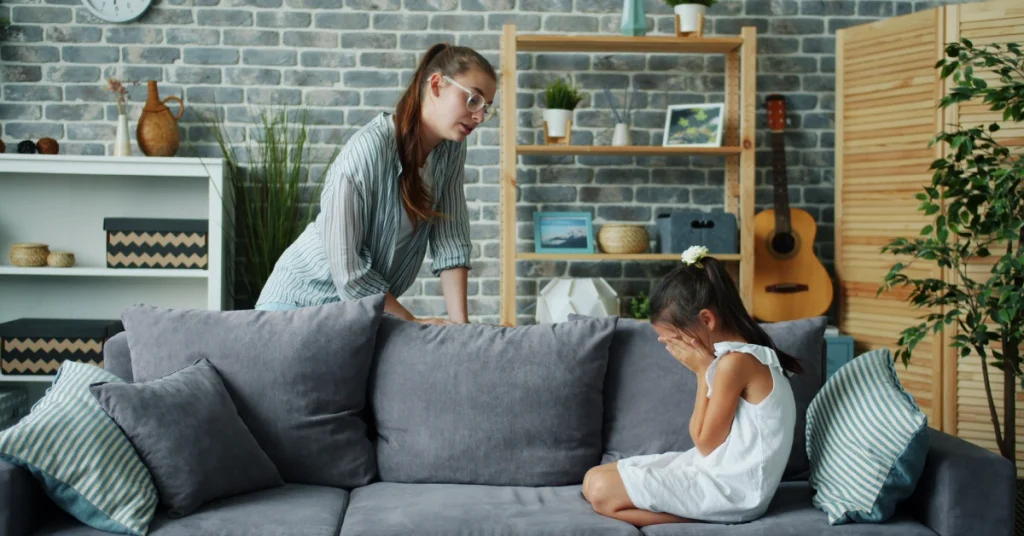
A three-year-old melting down on the kitchen floor because her banana broke in half isn’t being naughty. She’s overwhelmed by a feeling she doesn’t have the words for yet, in a body that hasn’t learned regulation.
That doesn’t mean you let her hit or throw things. It just means the response isn’t punishment — it’s presence. Get low. Wait it out. Name what you see (“that was really disappointing”). The lesson happens after the storm passes, not during it.
I used to try to reason with a mid-tantrum toddler. It’s like trying to have a chat with someone who’s on fire.
Comparing your kid to another kid
Noah walked at 10 months. Lily walked at 15. Same house, same parents, same everything. Toddlers develop on wildly different timelines, and the ones who talk early aren’t smarter, and the ones who potty train late aren’t behind.
The comparison trap is quiet but corrosive. It makes you push when you should wait, and worry when you should just watch. Your kid is on their own schedule. Trust it.
And if you’re reading this at 9pm, second-guessing three things you did before dinner — welcome to the club. The fact that you’re thinking about it at all is a pretty good sign you’re doing better than you think you are.